
Journal Article Wellnes
🫁 5 Traditional Chinese Herbs for Lung Wellness
In Traditional Chinese Medicine (TCM), the lungs play an important role in the overall balance of the body. They are traditionally associated with breathing, the circulation of Qi, and the relationship between the body and its external environment. For centuries, certain plants and herbal ingredients have been traditionally used in Chinese practices as part of everyday wellness routines, particularly to support respiratory comfort and care for the throat and lungs. Among them are Chen Pi, Jin Yin Hua, Ju Hua, Bai He and Mai Dong.
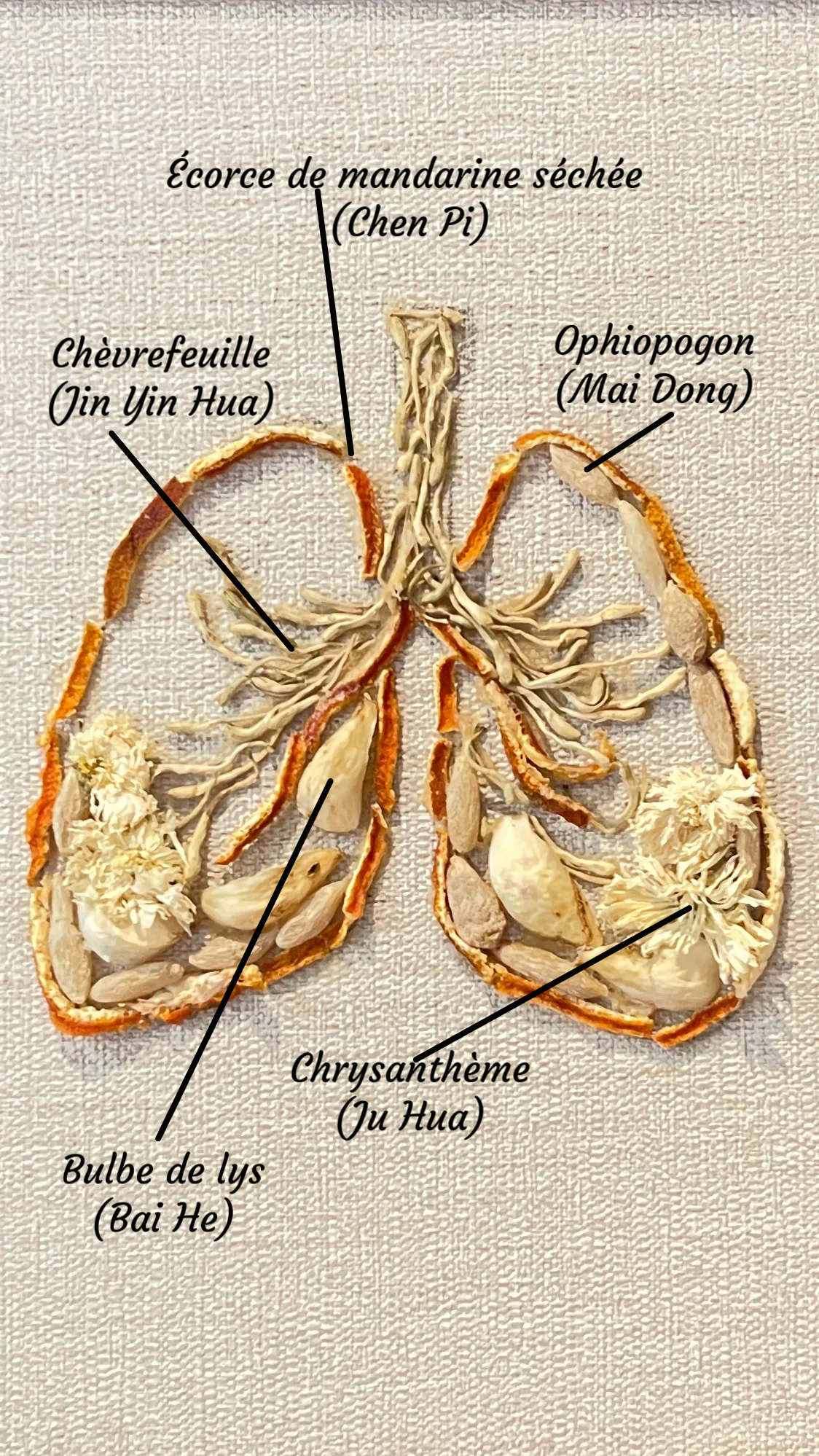
In Traditional Chinese Medicine (TCM), the lungs play an important role in the overall balance of the body. They are traditionally associated with breathing, the circulation of Qi, and the relationship between the body and its external environment.
For centuries, certain plants and herbal ingredients have been traditionally used in Chinese practices as part of everyday wellness routines, particularly to support respiratory comfort and care for the throat and lungs.
Among them are Chen Pi, Jin Yin Hua, Ju Hua, Bai He and Mai Dong.
Please note: The uses described in this article are based on Traditional Chinese Medicine theories and traditional practices. They should not be considered modern medical treatments or replace professional medical diagnosis or care.
1. Chen Pi — Dried Mandarin Orange Peel
Chen Pi refers to dried citrus peel, traditionally prepared from mandarin oranges and widely used in Traditional Chinese Medicine.
According to TCM theory, Chen Pi is associated with Qi and with the traditional concepts of “dampness” and “phlegm.” It has traditionally been included in different herbal preparations intended to support digestive and respiratory comfort.
With its distinctive citrus aroma and flavor, Chen Pi is also a popular ingredient in traditional Chinese teas and herbal drinks.
2. Jin Yin Hua — Honeysuckle Flower
Jin Yin Hua generally refers to honeysuckle flowers and is a widely used botanical ingredient in traditional Chinese herbal practices.
According to TCM theory, Jin Yin Hua is traditionally associated with the concept of “clearing heat.” It has traditionally been included in herbal preparations intended to soothe the throat and support the body's overall balance.
Its delicate floral aroma also makes it a popular ingredient in traditional herbal teas.
3. Ju Hua — Chrysanthemum Flower
Ju Hua, or chrysanthemum flower, is one of the most recognizable plants in Chinese traditional culture.
In TCM theory, certain varieties of chrysanthemum are traditionally considered cooling and are associated with maintaining throat comfort and overall balance.
Chrysanthemum tea is also a popular traditional Chinese beverage, appreciated for its light floral aroma and refreshing taste.
4. Bai He — Lily Bulb
Bai He refers to the bulb of certain lily species traditionally used in Chinese herbal practices.
According to TCM theory, Bai He is associated with the Lung and Heart and has traditionally been used to nourish what TCM describes as “Yin” and to support throat comfort, particularly when dryness is experienced.
Its naturally mild flavor makes it suitable for combining with other botanical ingredients in traditional herbal preparations.
5. Mai Dong — Ophiopogon
Mai Dong is a botanical ingredient traditionally used in Chinese herbal practices and is commonly associated with plants of the Ophiopogon genus.
According to TCM theory, Mai Dong is associated with Lung Yin and Heart Yin. Traditionally, it is used to support fluid balance and maintain throat and respiratory comfort.
In traditional formulations, Mai Dong may be combined with other ingredients such as Bai He or Gou Qi Zi (goji berry), depending on seasonal traditions and individual needs.
The Role of the Lungs in Traditional Chinese Medicine
In Traditional Chinese Medicine, the concept of the “Lung” does not refer exclusively to the anatomical organ described by modern medicine.
Within the TCM framework, the Lung is also considered a functional system associated with the body's overall balance and energy.
Traditionally, the Lung is associated with:
breathing and Qi;
the movement and distribution of Qi throughout the body;
the relationship between the body and its external environment;
the skin and the body's exterior, according to TCM theory;
certain aspects of fluid movement within the body described by traditional Chinese medicine.
For this reason, traditional Chinese wellness practices often pay particular attention to the Lung during seasonal changes, especially in autumn.
Why Does Traditional Chinese Medicine Associate Herbs with the Seasons?
Traditional Chinese Medicine places considerable importance on adapting daily habits to the changing seasons.
Autumn is traditionally associated with the Lung and the Metal element. It is often described in TCM as a season characterized by “dryness,” which is why traditional wellness practices may place particular emphasis on foods and plants considered gentle and nourishing.
Ingredients such as Bai He, Mai Dong, Ju Hua and Chen Pi can therefore be found in different traditional herbal preparations associated with autumn.
The purpose of this traditional approach is not to treat disease, but rather to incorporate plants into everyday wellness routines as part of a holistic lifestyle.
How Can These Herbs Be Incorporated into a Daily Routine?
Plants traditionally used in Chinese herbal practices can be prepared in different ways, including infusion, decoction, or combination with other botanical ingredients.
At ZIZAI, we aim to make Chinese herbal traditions simple and accessible: discovering plants, learning about their history, and exploring how they can become part of everyday wellness routines.
A cup of herbal tea can also become a quiet moment in the day, particularly during seasonal transitions.
However, plants and quantities should always be chosen with care. Certain herbs may not be suitable for specific individuals or may interact with certain medications.
From an Ancient Tradition to Modern Wellness
Traditional Chinese Medicine has a history spanning centuries and takes a holistic approach to understanding the relationship between the body and nature.
Discovering Chen Pi, Jin Yin Hua, Ju Hua, Bai He and Mai Dong is not only an opportunity to learn about traditional Chinese herbs, but also a way to explore an important part of Chinese culture and its traditional approach to everyday wellness.
At ZIZAI Paris, we aim to make Chinese herbal traditions more accessible in Paris through plants, traditional teas and a contemporary approach to everyday wellness.
Discover our herbs and traditional teas through our online shop, or visit us at our space near Odéon in Paris.
Important Note
The information provided in this article is for cultural and informational purposes only. It describes traditional Chinese medicine theories and traditional uses of botanical ingredients and does not constitute medical advice. Herbal teas and plants should not replace treatment prescribed by a healthcare professional. If you have a medical condition, persistent symptoms, are pregnant, or are taking medication, consult a healthcare professional before using medicinal herbs.