
Journal Article Wellnes
🫀6 Traditional Chinese Medicine herbs for heart health
Discover six iconic herbs from the Chinese tradition, traditionally associated with supporting the heart, circulation, and overall balance. A gentle approach to Chinese herbalism for daily self-care.
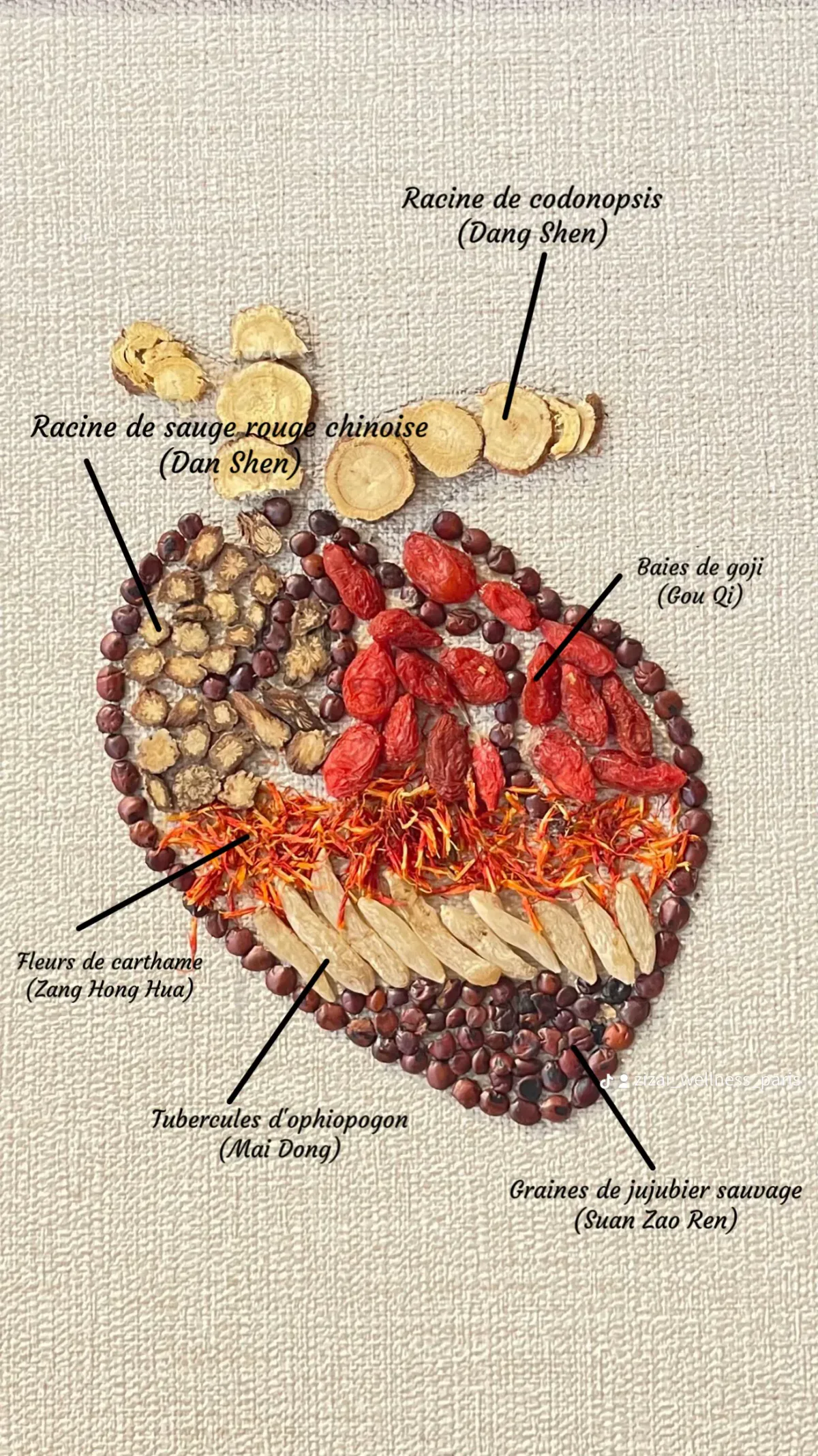
🌿 1. Dang Shen — 党参
Traditionally associated with Qi and vitality
Dang Shen, the root of Codonopsis, is one of the commonly used plants in traditional Chinese herbal practice.
It is traditionally associated with Qi, a central concept in Chinese medicine referring to the body's vital energy and overall vitality.
With its gentle and nourishing character, Dang Shen is traditionally used in preparations associated with supporting Qi and nourishing the Spleen and Lungs. It is therefore commonly found in traditional formulas intended to support everyday vitality.
Its flavour is mild and slightly sweet, with gentle vegetal and subtle cereal-like notes. It can be infused on its own or combined with other herbs.
Traditionally associated with: Qi · vitality · energy · overall balance
🌿 2. Dan Shen — 丹参
A traditional herb associated with circulation
Dan Shen, commonly known as Chinese red sage, is one of the most distinctive plants in traditional Chinese herbal practice.
Its root has traditionally been used in preparations associated with blood circulation. Within traditional Chinese theory, the harmonious movement of Qi and blood is considered important to maintaining the body's overall balance.
Dan Shen is also traditionally associated with the Heart, giving it an important place in many classical herbal preparations.
Its flavour is more pronounced than that of many milder herbs, with a characteristic bitter, vegetal, and slightly woody character.
Traditionally associated with: circulation · blood balance · Heart · overall well-being
🌿 3. Suan Zao Ren — 酸枣仁
Traditionally associated with calm and restful sleep
Suan Zao Ren, the seed of the wild jujube, has a particularly important place in traditional Chinese herbal practice because of its traditional association with Shen, a concept related to the mind, emotions, and inner calm.
It has traditionally been used in preparations intended to support calmness and restful sleep, particularly when one's usual sleep or sense of inner calm is disturbed.
Rather than simply seeking to induce sleep, the traditional approach focuses more on helping the body and mind return to a calmer and more balanced state.
Its flavour is mild, slightly sweet, and vegetal, with a more pronounced aroma when the seeds have been roasted.
Traditionally associated with: calm · relaxation · sleep · emotional balance
🌿 4. Goji Berries — 枸杞
A small berry with a long tradition of use
Goji berries, known as Gou Qi Zi in Chinese, are among the best-known ingredients in traditional Chinese wellness culture.
Traditionally, goji berries are considered nourishing to Yin and are associated with supporting the Liver and Kidneys within traditional Chinese theory.
Unlike many traditional herbs, goji berries are also widely used as a food in everyday Chinese cuisine. They can be eaten directly or added to teas, soups, and other dishes.
They have a naturally sweet and fruity flavour, adding gentle sweetness and fruit notes to an infusion.
Traditionally associated with: Yin · vitality · nourishment · overall balance
🌿 5. Hong Hua — 红花
A traditional herb associated with circulation
Hong Hua, commonly known as safflower, has been used for centuries in traditional Chinese herbal practice.
Its flowers are traditionally associated with the movement of blood and are included in various traditional herbal preparations intended to support harmonious circulation.
Within traditional Chinese theory, Qi and blood are closely connected. Their harmonious movement is considered an important part of maintaining the body's overall balance.
Hong Hua has a mildly bitter and aromatic flavour, while its distinctive colour also makes it a recognisable ingredient in traditional herbal preparations.
Traditionally associated with: circulation · Qi · blood · bodily balance
🌿 6. Mai Dong — 麦冬
Traditionally associated with nourishing Yin and maintaining balance
Mai Dong, or Ophiopogon root, has been used for centuries in traditional Chinese herbal practice.
It is particularly associated with nourishing Yin and is traditionally used in preparations intended to support the body's fluids and maintain internal balance.
In certain traditional formulas, Mai Dong is also associated with the Heart and Lungs, particularly in traditional approaches addressing dryness or discomfort associated with an imbalance of Yin.
Its flavour is mild and subtly sweet, with a delicate vegetal character and a soft mouthfeel when infused.
Traditionally associated with: Yin · fluids · Heart · Lungs · balance
❤️ The Heart in Traditional Chinese Medicine: A Balance Between Body and Mind
One of the defining characteristics of Traditional Chinese Medicine is its holistic approach to well-being.
The Heart, sleep, emotions, the movement of Qi and blood, digestion, and overall vitality are not viewed as completely separate elements. Instead, they are traditionally considered interconnected parts of the body's overall balance.
This is why traditional Chinese herbal formulas often combine several plants rather than focusing on a single ingredient.
A traditional formula may, for example, combine herbs traditionally associated with Qi, ingredients related to blood circulation, plants used to nourish Yin, and others traditionally used to support calmness and restful sleep.
🌿 In the traditional Chinese approach, caring for the Heart also means caring for the body and the mind.
It does not necessarily mean making dramatic changes to everyday life. It can begin with simple daily rituals: maintaining a balanced diet, getting enough rest, taking moments to slow down, and choosing a tea or herbal infusion according to how you feel.
Our aim is to introduce the traditions of Chinese herbal culture in a simple and accessible way, bringing the Eastern philosophy of balance into modern everyday life.
Note: The information in this article describes the traditional uses of these plants within Traditional Chinese Medicine and Chinese herbal traditions. It is not medical advice and does not replace consultation with a qualified healthcare professional or prescribed medical treatment. Some herbs may have contraindications or interact with medications.