
Journal Article Wellnes
🧘 Qi: Understanding Vital Energy in Traditional Chinese Medicine
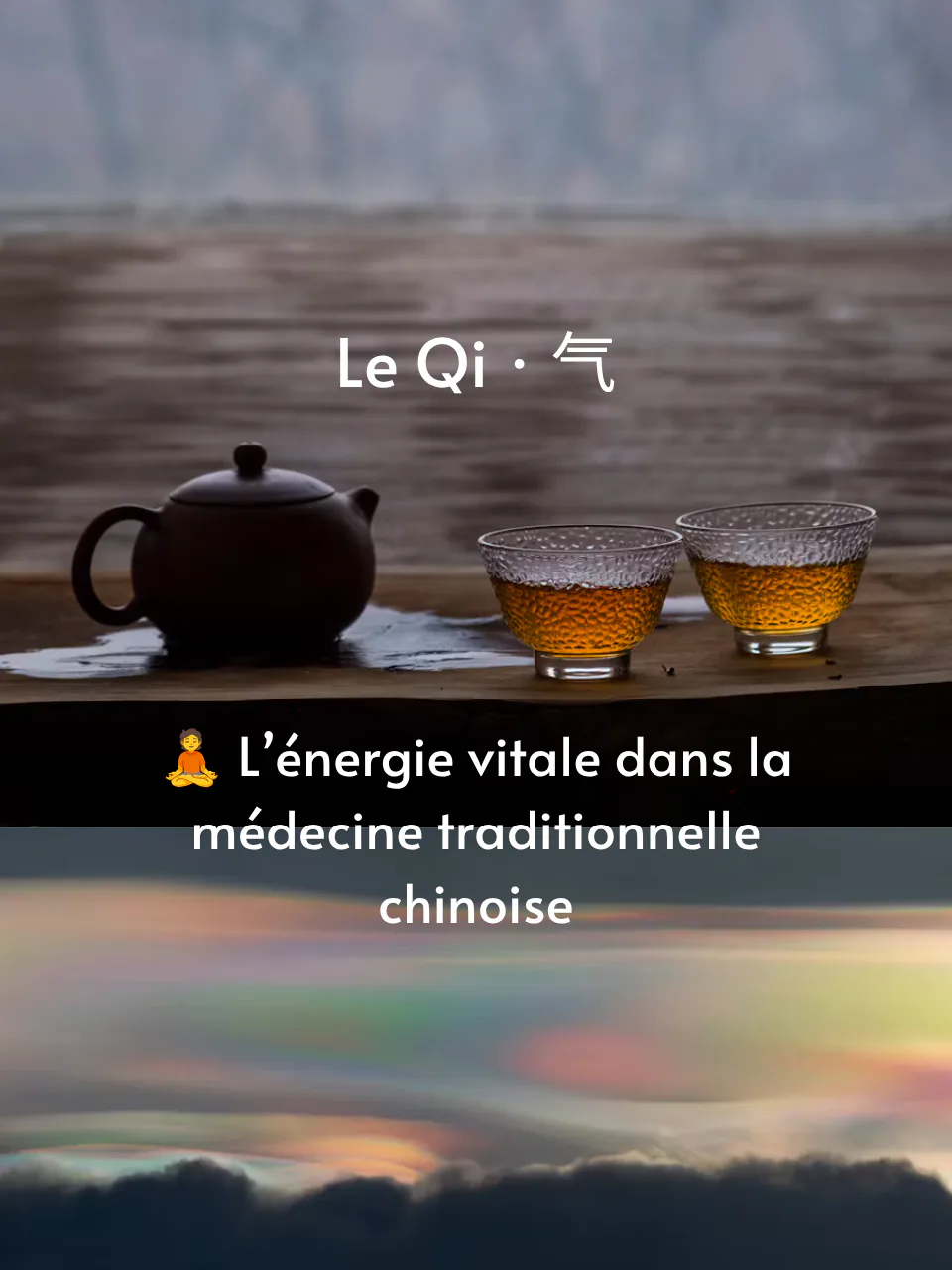
Qi (气) is one of the fundamental concepts of Traditional Chinese Medicine (TCM). Often translated as “vital energy,” Qi plays an important role in traditional Chinese understandings of the body, vitality, and everyday balance. But what does Qi actually mean, and how does this concept fit into traditional Chinese ways of life?
What Is Qi?
In traditional Chinese philosophy and medicine, Qi is a dynamic concept associated with life and the functioning of the body. According to this traditional framework, Qi circulates throughout the body and is connected to the meridians, a conceptual network used in TCM.
Qi is not exactly equivalent to energy as defined and measured in modern physics. Rather, it is a traditional concept used to understand certain aspects of bodily function and balance.
Put simply, traditional Chinese thought views vitality as depending not on a single factor, but on the harmony between different functions and lifestyle habits.
Qi Deficiency and Qi Stagnation
In Traditional Chinese Medicine, Qi can be described in different ways depending on the situation.
Qi Deficiency
Qi deficiency is a traditional TCM concept associated with insufficient vitality. In traditional descriptions, it may be linked to fatigue, low energy, or sweating easily.
However, these experiences can have many different causes. They cannot, on their own, establish a diagnosis of Qi deficiency.
Qi Stagnation
Qi stagnation refers to a state in which the flow of Qi is considered to be obstructed within the traditional TCM framework. It is sometimes associated with feelings of tension, abdominal discomfort, or a sense of blockage.
These concepts belong to the traditional theoretical framework of TCM and should not be confused with established physiological mechanisms in modern medicine.
How Can We Support Everyday Well-Being?
Yangsheng (养生), often translated as “nourishing life,” encompasses traditional Chinese practices that encourage a balanced way of living.
Rather than trying to control every aspect of daily life, we can adopt a few simple habits that support general well-being:
Move regularly: Walking and appropriate physical activity help maintain fitness.
Make time for breathing: Moments of calm, mindful breathing can encourage relaxation.
Maintain a regular sleep routine: Consistent sleep habits support a healthy daily rhythm.
Eat a varied diet: A balanced and diverse diet contributes to overall health.
Create moments of pause: Taking time to prepare a warm drink can become a pleasant daily ritual.
These habits reflect a holistic approach to well-being. They are not specific treatments for Qi deficiency or Qi stagnation.
Tea and Herbal Infusions in the Tradition of Yangsheng
Tea and herbal infusions hold an important place in Chinese culture. Beyond their flavors, preparing and enjoying a drink can become part of a daily ritual that encourages greater attention to ourselves and our surroundings.
In some traditional TCM practices, plants are selected according to specific traditional principles. However, traditional use does not mean that a plant is suitable for everyone or that its therapeutic effects have necessarily been scientifically established.
At ZIZAI, we aim to share this cultural heritage through tea, botanicals, and herbal infusions inspired by Chinese traditions. We invite you to explore different flavors, learn about plants, and incorporate moments of tea enjoyment into everyday life.
Discover the Tradition of Yangsheng with ZIZAI
Understanding Qi is an introduction to traditional Chinese perspectives on the body and vitality. Together with Yin and Yang, Qi forms part of a broader set of concepts that have influenced traditional Chinese wellness practices.
Through tea, herbal infusions, and the philosophy of Yangsheng, ZIZAI invites you to discover this cultural heritage and find everyday rituals that suit your own pace of life.
Explore our selection of teas and herbal infusions and discover the Chinese tradition of caring for yourself in everyday life.
Note: Qi and meridians are concepts within Traditional Chinese Medicine. This article presents a cultural and theoretical tradition; it does not replace medical advice, diagnosis, or treatment. If you experience persistent fatigue or unusual symptoms, consult a qualified healthcare professional.